
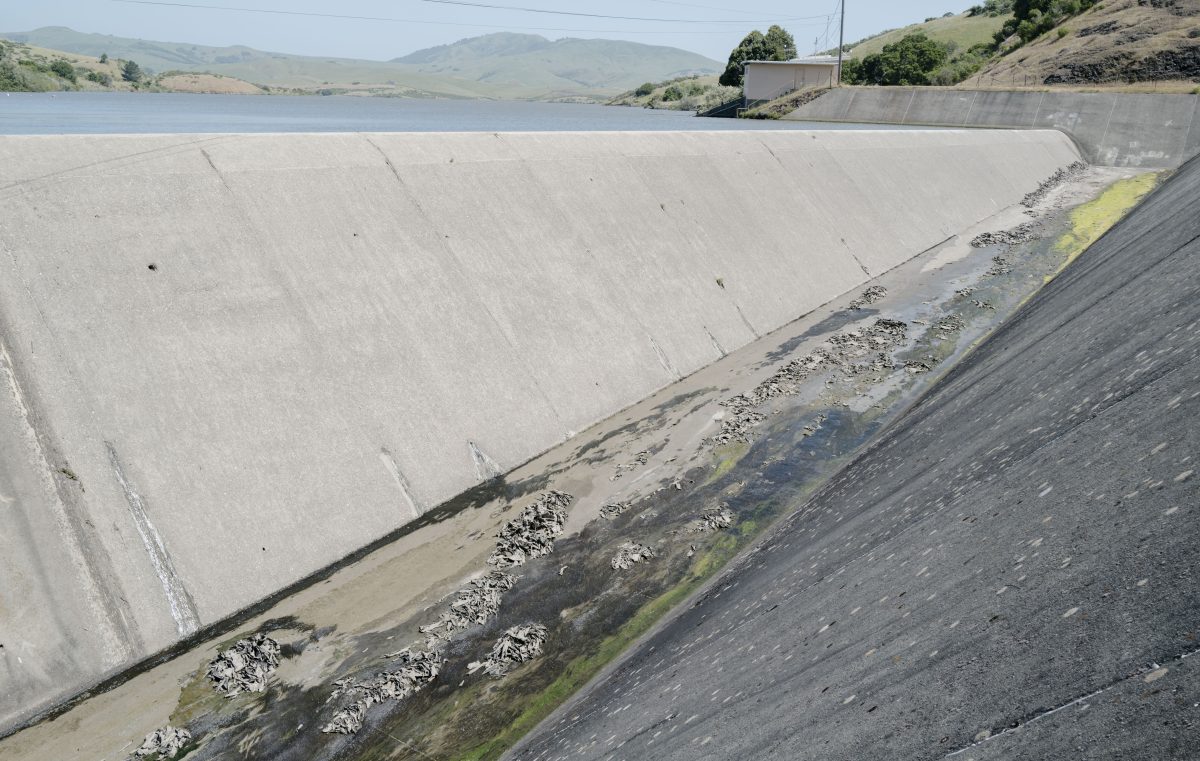
Concerns about increasing the capacity of a reservoir are seeping from Nicasio to Point Reyes Station like a slow drip through a leaky dam.

Raising the Nicasio Reservoir spillway is one of several short-term steps that Marin’s municipal water district is considering to increase its storage capacity and enhance its ability to endure future droughts. 

The plan calls for installing a 280-foot-long, 4.4-foot-high inflatable rubber gate spanning the top of the spillway. The gate would be inflated during the wet season to increase storage and lowered during the dry season.

Since Marin Water announced the plan last fall, Nicasio residents have responded with fierce opposition. Many argue that raising the reservoir level would exacerbate seasonal flooding, which is already a problem at the Nicasio School and at several homes along the banks of Nicasio Creek. 

They have voiced their concerns at a series of meetings with the directors of Marin Water, which held three public meetings and is collecting written comments. 

Now some Point Reyes Station residents are raising questions of their own: What happens if the rubber gate fails? If they are subject to potential impacts, why weren’t they notified of the proposal?

As the district prepares an environmental impact report on the spillway plan, the deadline for submitting comments is fast approaching.

“We’re all supposed to submit public comments by 5 p.m. on Aug. 4 or forever hold our peace?” said Marcel Houtzager, whose Black Mountain property stands just below the reservoir spillway, on both sides of the Point Reyes-Petaluma Road. “That would be fine if they’ve given us proper notice, but they absolutely, positively did not.”

Mr. Houtzager, who stressed that he is not an engineer, recently made some rough, back-of-the-envelope calculations to gauge the possible impact of a spillway failure during an atmospheric river. 

He concluded that the water from Lagunitas Creek, which is fed by the reservoir when levels spill over the dam, could cascade toward Point Reyes Station at four times the rate it did during the 1982 flood, one of the most destructive weather events in West Marin history.

“Let’s say the rubber bladder that is meant to be holding back all this water fails,” Mr. Houtzager said. “It’ll be like turning on a fire hose.”

Marin Water has met several times with members of the Nicasio Land Owners Association, which sent two of its members, including president Ruth Dawson, to give a presentation at this month’s Point Reyes Station Village Association meeting. 

“As a town, we’ve been focused very much on upstream impacts,” Ms. Dawson said at the meeting. “But recently we’ve had conversations with some folks on the Point Reyes side about the downstream impacts.”

Although the reservoir is located in Nicasio, it doesn’t provide water to the village, which is served by private wells. Ms. Dawson encouraged village association members to submit comments to Marin Water before the deadline.

“What would happen if someone took a bullet to this inflatable dam and all of a sudden you had all that water come crashing down?” she asked. 

She also warned that atmospheric rivers are becoming more frequent and severe.

“Look what just happened in Texas, right? Clearly the volume of water is increasing,” she said.

The water district itself has not reached out to the village association about the spillway project, according to Mark Switzer, the association’s secretary. 

“There’s two ways of looking at that,” he told the Light. “Either it was just an oversight, or they’re not thinking about downstream effects, which, if that’s the case, is kind of mind-boggling.”

Adriene Mertens, a spokeswoman for the district, said the agency has taken various steps to publicize its plans, holding meetings to gather community input and announcing all of them in its newsletter and on its website.

“We have heard from some Point Reyes Station community members during the Environmental Impact Review scoping process,” she said in an email to the Light. “We appreciate those comments as this process is meant to collect questions and concerns from stakeholders that help to inform further items to investigate during the environmental review.”

The $15 million spillway project would increase the reservoir’s capacity by 3,700 acre-feet, an increase of roughly 15 percent. (An acre-foot is about 326,000 gallons, or enough water to cover an acre of land about 1 foot deep.) 

Ms. Mertens said the district selected the inflatable spillway design after conferring extensively with the California Division of Safety of Dams.

“While other technologies and designs were considered, the inflatable spillway gate concept was suggested to be a strong option given the ability to maintain upstream control,” she said.

The spillway could be lowered during atmospheric rivers to prevent flooding above the spillway or damage to the rubber barrier that could pose danger to properties below it, she said.

Construction would begin in 2027. Marin Water owns much of the land around the reservoir where the waters would rise, but inundation maps show the flooding would extend beyond its own property lines, potentially affecting a handful of private properties.

After the 2021 drought severely tested supply, the district adopted a water supply roadmap that included various short- and long-term projects to expand its storage capacity. 

Raising the spillway is the second of those to spark controversy in West Marin. The district also considered expanding the Soulajule Reservoir, a project that would have flooded several multigenerational ranches in Hicks Valley. After residents protested, the district put the idea on the back burner.

For more information about the project, email [email protected] or go to https://www.marinwater.org/SpillwayModifications.