
Natasha Benjamin, an East Bay marine biologist and filmmaker, has spent many a weekend surfing and diving along the northern California coast, from West Marin to Mendocino. She remembers times when she got tangled up in bull kelp so thick, it was dangerous.

But then, in what seemed like an instant, the region’s dense undersea forest was gone. Between 2014 and 2016, 95 percent of the bull kelp between San Francisco and Oregon vanished—devastated by warming ocean temperatures, a sea star wasting disease, and an ecosystem out of balance. 

“I basically watched the kelp disappear before my very own eyes,” Ms. Benjamin, 49, told the Light. “Marin, Sonoma and Mendocino are the epicenter, the ground zero of this kelp loss. I started talking to folks about it and realized that the scientists were quite shocked about what was happening. We had never really seen anything like this before.”

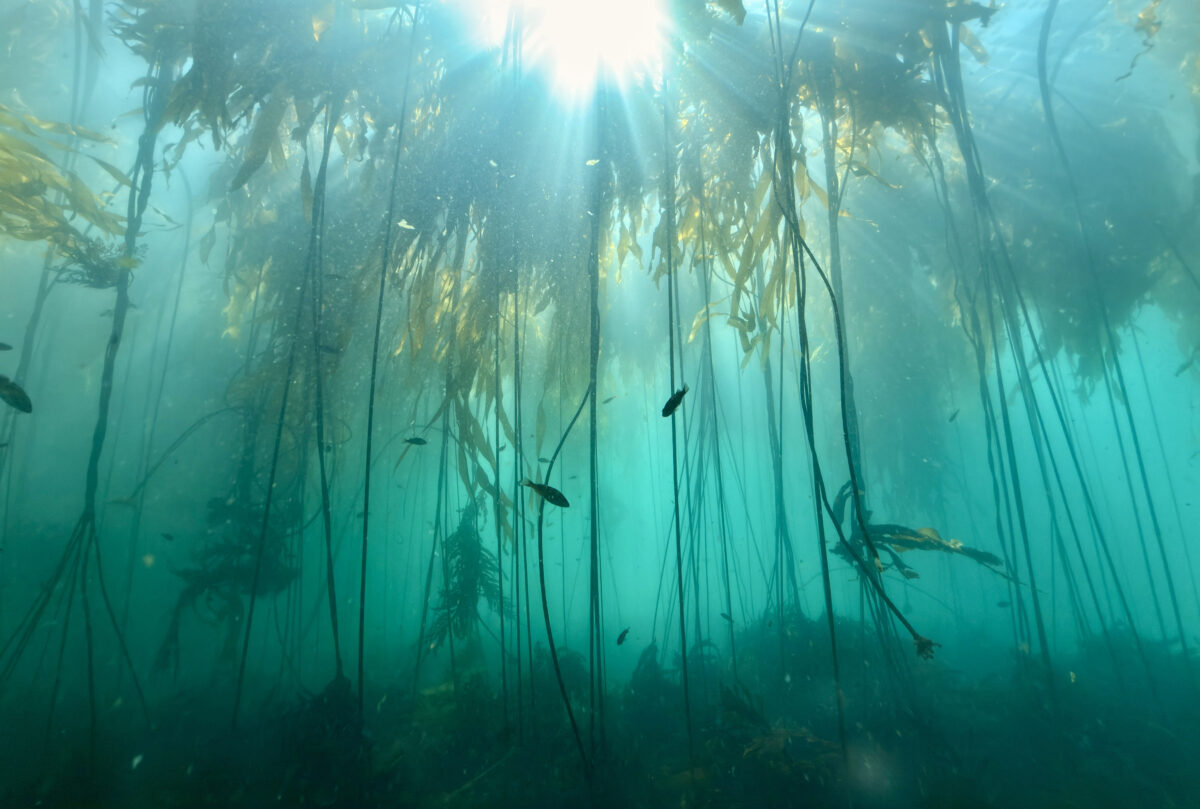
Kelp forests are considered the ocean’s redwood forests, providing food, hiding places and habitat for a host of fish, invertebrates and marine mammals. Rockfish, abalone and sea urchins feed on it. A single bull kelp can extend as much as 60 feet from the ocean floor to the surface and grow six inches in a day.

Ms. Benjamin, whose parents are filmmakers, decided to make a movie—her first—to bring attention to an ecological crisis that has already devastated northern California’s abalone and red sea urchin fisheries. 

She will screen “Sequoias of the Sea” this Sunday, Feb. 1 at the Dance Palace, at an event co-sponsored by Hog Island Oyster Company and Blue Frontier, an East Bay environmental nonprofit dedicated to ocean protection, where Ms. Benjamin works as the associate director. An array of local groups, including the Greater Farallones Association, the Environmental Action Committee of West Marin and the Point Reyes National Seashore Association, will have tables at the event.

To make the film, Ms. Benjamin teamed up with Ana Blanco, the executive director of the International Ocean Film Festival. The idea came together while they were having lunch with Ms. Benjamin’s father at Fish, the Sausalito seafood restaurant. 

“I asked Ana if the festival had screened a film about kelp, and she said no,” Ms. Benjamin said. “My father looked at us and said, ‘You guys should make a film.’”

Ms. Benjamin accepted the challenge. “This is our backyard,” she said. “This is happening right here. Losing 95 percent of an ecosystem is shocking. People should know about it.”

The film focuses on the Mendocino coastal community of Fort Bragg, where a once-thriving fishing industry has been reeling since the kelp forests were struck. The resulting damage to the abalone and red sea urchin fisheries dealt a blow to the local economy. It also disrupted traditions and ceremonies of the region’s Pomo tribes, for whom abalone holds great cultural significance.

The film captures the community’s determination and resilience as it responds to the disappearance of a crucial ecosystem. “They have come together in a way that is quite unique and special—the fishermen, the tribes, the scientists, local community members,” Ms. Benjamin said. “Biodiversity loss is happening all over the world, but we decided to tell this very local story.”

The devastation of kelp forests resulted from a perfect storm of ecological stressors, beginning with a sea star wasting disease in 2013 that wiped out populations of sunflower sea stars. The sea stars, which can grow up to 28 legs and weigh up to 16 pounds, were the primary predator of sea urchins ever since the North Coast’s sea otters were hunted to near extinction 150 years ago. 

“Their arms would curl up, and then they’d go soft, and then just fall off. And within days to weeks, they turned into smudges on the bottom of the ocean,” said David Helvarg, who authored a book that will be released in May called “Forest of the Sea: The Remarkable Life and Imperiled Future of Kelp.”

As the climate warms, kelp die-offs are likely to happen with increasing frequency. They have already taken place in Mexico, Norway and Tasmania, which, like northern California, has lost 95 percent of its kelp forests, Mr. Helvarg said. “This is the next big ocean issue,” he said. “It’s the global forest disaster nobody knows about.”

With sea stars absent from the northern California coast, the population of purple sea urchins, which feed on kelp, has exploded. “Now we have a carpet of purple urchins where these kelp forests used to exist, and purple urchins have no predator,” Ms. Benjamin said. 

Compounding the problem, the purple urchins can go without food during extended periods of hibernation, then reemerge like zombies whenever kelp reappears.

After the sea star disease came an extended marine heat wave that lasted from 2014 until 2016. Known as “the blob,” the heat wave reduced nutrient upwelling, the process by which deep, cold water rises to the surface, carrying nutrients with it.

Driven by climate change, marine heat waves have become more common in recent years, further stressing kelp forests, and, by extension, the abalone that depend on them for sustenance. The California Fish and Game Commission closed the recreational abalone fishery in 2018 and recently extended the closure through 2036.

“This is happening at our front door, and when an ecosystem is out of balance, we need to be doing our part to try to understand the problem,” said Terry Sawyer, vice president and co-founder of Hog Island Oyster Company. “We’re part of the ecosystem ourselves. We want to raise awareness that we’ve got a problem here. Let’s have a conversation about what we can do about it.”

Hog Island incorporates seaweed—not kelp—into some of its items, including a miso nori butter made with the wild nori that grows naturally on its oyster gear in Tomales Bay.

“Sequoias of the Sea” shows urchin divers seeking ways to extract what culinary benefits they can from the damaged kelp ecosystem. Traditionally, Fort Bragg urchin divers harvested only red urchins—a fatter, tastier variety than the purple urchins that now blanket the reefs. 

Grant Downie, the North Coast representative of the California Sea Urchin Commission, is shown serving up purple urchin from a dock in Noyo Harbor, Fort Bragg’s main port. 

“Diversifying as an uni fisherman these days is the only way you’re going to survive,” he says. “For my whole career, I focused on red sea urchins, until the perfect storm hit, and the red sea urchin industry went into a collapse.”

Mr. Downie, who thinks of purple urchins as the avocado of the sea, serves them in tiny paper cups with a ginger beer base, a splash of ponzu, a dash of sriracha and a fresh squeeze of lime.

While he makes the most of a challenging situation, Mr. Downie is hoping that the efforts underway to restore the kelp forests are successful. A variety of approaches are being employed, from growing kelp spores in marine laboratories and planting them on the ocean floor to sending teams of divers to smash purple urchins with hammers.

Contributing to those efforts is Rietta Hohman, the kelp restoration project manager for the Greater Farallones Association, which has partnered on the work with the Greater Farallones and Cordell Bank National Marine Sanctuaries. While the film focuses on their four restoration sites in Sonoma County, Ms. Hohman participated in a previous project that involved planting kelp near Double Point. 

The project ran from 2022 through 2025. “Three years is really quick,” Ms. Hohman said. “We did see a pretty dramatic increase in kelp canopy cover at the restoration site, which was really exciting. But without a longer-term project, it’s hard to tell if that resulted directly from our planting efforts.”

Kelp creates magical places in the ocean, she added: “A healthy kelp forest has an incredible amount of biodiversity and just vibrant color. It’s just an explosion of life. The kelp reaches all the way from the reef to the surface of the ocean and rays of sunshine come through and light everything up. It’s incredible to see.”

In addition to playing a crucial role in the food web, Ms. Hohman said, kelp captures carbon and stores it on the ocean floor. 

“Even though they’re hidden underneath the ocean, they provide really important ecosystem services,” she said. “We really need them.”

To reserve seats for the Feb. 1 screening, go to https://www.tickettailor.com/events/bluefrontier/1993933