

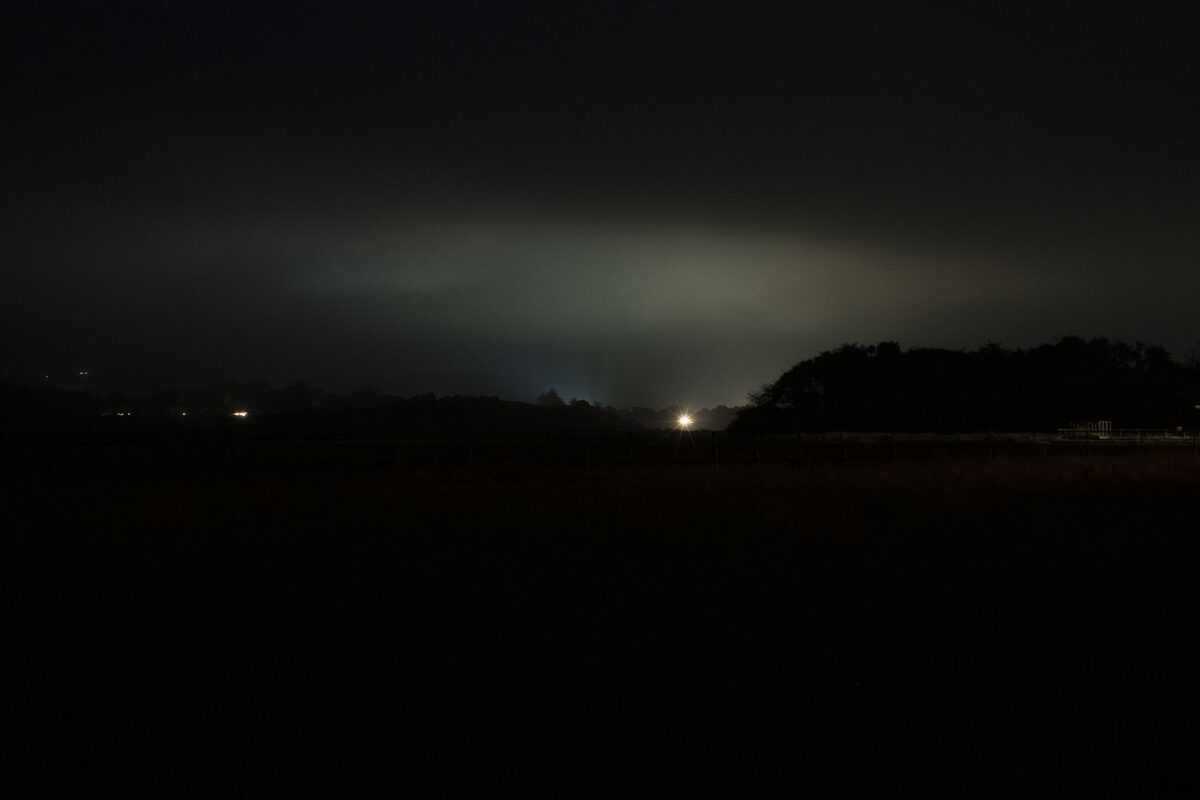
West Marin can’t do much about the fog, but perhaps it can do something about its night sky.
A petition launched by DarkSky West Marin is asking the Marin County Board of Supervisors to integrate dark sky-friendly lighting policies into the upcoming coastal visioning process and county codes. New lighting rules would bolster changes that have so far been voluntary and limited, the group says.
West Marin is among the 1 percent of U.S. communities that can still see the Milky Way at night. An initiative that started under the Point Reyes Station Village Association in 2020 advocates for the goals introduced by DarkSky International, recognizing that the area is uniquely positioned on the edge of an urban and suburban light dome.
The petition, which has gathered just over 400 online signatures, outlines actionable steps people can take to upgrade infrastructure and save energy, and it urges the county to adopt new rules such as light shield requirements.
A lighting ordinance would strengthen West Marin’s efforts to become a certified DarkSky Community—one that shows a lasting commitment, through enforceable preservation policies, to preserve their view of the Milky Way.
The initiative stresses that not only would these steps preserve the galactic view, but they would also benefit migrating birds and other wildlife. Some migratory birds rely on moonlight and starlight for a sense of direction. Artificial lights, which are exacerbated by fog, can alter migration timelines and steer them off course. Light pollution can also have repercussions for nocturnal mammals, amphibians, and insects during breeding seasons and while they hunt.
One of the items advised by the petition—shielding artificial light—would allow sidewalks to be lit while limiting spillage onto reflective surfaces, such as rooftops and signs.
According to organizers, 31 L.E.D. streetlights were placed on power poles around Point Reyes Station about a decade ago. The lights replaced dimmer bulbs, and their blue hue worsened conditions.
After the initiative started up, the Point Reyes Fire Station integrated dark-sky aims into a renovation. Outdoor lights are now turned off except when needed, and all supplemental lighting in and around the station is shielded, except around the sheriff’s substation.
In 2022, after meeting with advocates, West Marin School installed shields on its bright outdoor lights that direct the beam downward. Wells Fargo Bank also joined these efforts by installing a shield on a central light illuminating its back parking lot.
Yet the push for building modernization can sometimes move faster than local initiatives. On the morning of July 21, Wells Fargo replaced its painted wooden sign—but the new one lasted only a few hours. The bank manager told the Light that the replacement was part of a larger effort to upgrade the building.
The sign was built from a synthetic material and was nearly double the previous sign in height. One resident described it as a billboard, and others claimed it posed a traffic hazard at the corner of Highway 1 and A Street. Marin County code prohibits signs from impairing pedestrian or vehicle safety.
By 11 a.m. that same day, the bank had taken it down.
Not many who complained that morning were thinking about light pollution. But the sign’s glossy, reflective face was exactly the kind of surface that would worsen light pollution and bounce light into the night sky.
The removal of the sign served as a timely, tangible example of why dark sky advocates say code updates are urgently needed. High-gloss plastic surfaces are something DarkSky explicitly warns against.
Now, Wells Fargo is working on another sign that will more closely resemble the previous one.
To some, the DarkSky petition may be brushed aside as a small-town pushback against development. But for Don Jolley, who leads a monthly stargazing event that raises funds for the initiative, thoughtful stewardship reflects an appreciation for West Marin’s public lands rather than knee-jerk opposition to modernity.
“It is not strictly about anti-development; it is about managing lighting in a thoughtful and purposeful way,” Mr. Jolley said. “We need to ask ourselves: ‘Are there ways to accomplish lighting and safety issues without needlessly encroaching on the night sky?’”
Globally, light pollution is one of the fastest-growing forms of artificial pollution, yet it remains one of the least discussed. Mr. Jolley stressed that if artificial light is allowed to erase the night sky unchecked, once a community loses its view of the Milky Way, that connection to the cosmos is effectively gone for generations.
While establishing county lighting ordinances would provide a regulatory backbone for long-term protection, Laura Arndt, who spearheaded the initiative alongside Peggy Day, emphasizes that, until then, meaningful change can happen at the individual level, simply by turning off house lights when they are not needed.
It is a gesture that speaks to the very reason people choose to live in Point Reyes, Ms. Arndt said. Many settle on the peninsula intentionally, drawn by its raw connection to the natural world.
Mr. Jolley said that for him, living here imbues him with a responsibility to steward the town’s unique qualities.
“In essence, the Milky Way is our home,” he said. “So when folks are concerned about shutting off their own porch lights, I entreat them to extend that same concern to extinguishing views of the Milky Way. Without that beacon overhead, we’re essentially lost, unable to find our way home, and for all intents left adrift in the cosmos.”
To read and sign the petition, search for “West Marin light pollution” at www.change.org. Learn more at https://darkskywestmarin.com/