

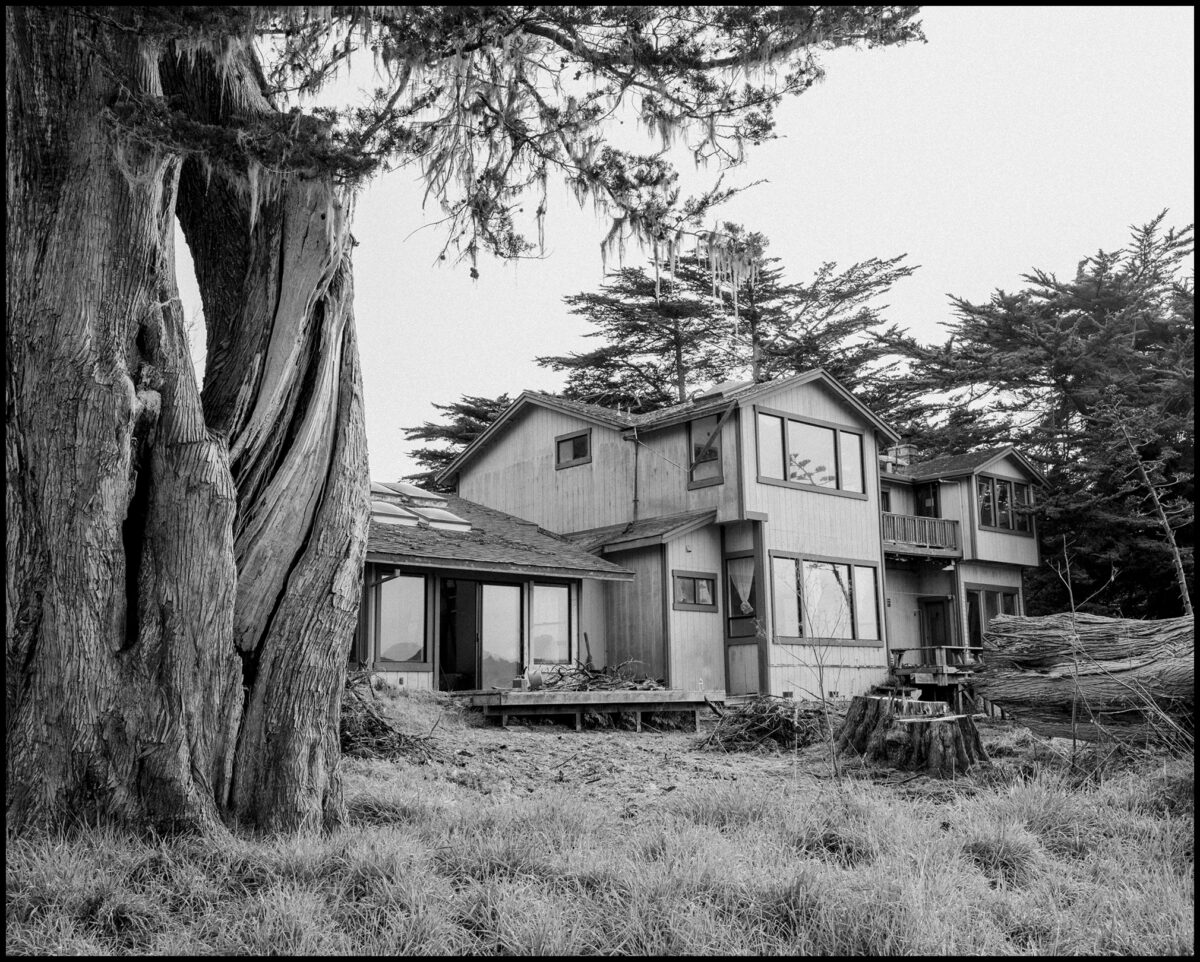
A long-dormant ranch on the eastern shore of Tomales Bay will soon provide much-needed housing for employees of the Point Reyes National Seashore.
Last month, the National Park Service broke ground on a $1.7 million rehabilitation of the former Dunn ranch, a 52-acre property just north of Marshall that’s part of the Golden Gate National Recreation Area but managed by the seashore. When construction is completed next year, a single-family farmhouse will be converted into a nine-bed residential compound for permanent and seasonal park employees.
Park officials say the project is intended to relieve a chronic issue that has constrained their operations for years: a dearth of employee housing in one of the most expensive counties in the nation.
“We have a real shortage of onsite housing, and it’s not easy to find housing outside of the park,” said Jason Briggs, the seashore’s facilities director. “Generally seasonal staffing has been limited by the amount of housing we have available.”
In Marin County, the median cost of a single-family home is $1.4 million and the median monthly rent is $3,695, according to Zillow. Those prices leave few viable options for employees whose wages render them rent-burdened in the private market.
The seashore hires about 20 to 30 seasonal workers from April through October, mostly to work with the trails crew, and the park is expected to provide housing for them during their contracts. Only 24 of the park’s 60 to 70 full-time employees live in park housing, and none of the park’s leadership staff reside within the seashore.
An internal housing study completed last year found that, given local rental prices and park service salaries, housing posed a “critical challenge” for the seashore, Mr. Briggs said. Investing in staff housing not only supports the workforce but helps preserve historic structures that might otherwise deteriorate.
That concern has taken on new urgency as the park assumes responsibility for dozens of additional residences following last year’s sweeping settlement that ended most commercial agriculture on the peninsula. The agreement spelled the closure of a dozen dairies and ranches that are now leaving behind houses and barns that require upkeep.
Asked whether any of those homes might be converted into staff housing, Mr. Briggs said no formal planning has begun. “We haven’t done assessments, but you can see here with things being left alone, things start to degrade really fast out here,” he said.
The Dunn farmhouse, built in 1914, will be converted into three units: a six-bedroom, three-bath main house, a one-bedroom garden studio and a two-bedroom unit at the north end of the 3,645-square-foot structure. Plans to add two additional units in the garage were shelved because of funding constraints.
The ranch’s history stretches back to the Civil War era, when the land formed part of the Tomales Bay holdings of Gen. Henry Halleck, the Union Army’s general-in-chief under President Abraham Lincoln.
Over the following century, the land changed hands several times before being acquired by the Dunn family, who sold it to the park service in 1992 for $3.5 million. The family retained a 25-year reservation of use and occupancy that expired in 2017.
The property has not been in agricultural use for about three decades and was most recently operated as a small horse farm. Several outbuildings scattered across the land—including a horse stable and a former creamery—are not included in the renovation effort.
Like all major infrastructure projects in the national park system, the Dunn ranch conversion had to compete for funding at the national level. In 2024, the seashore faced a $279 million backlog in deferred maintenance—repairs postponed due to limited funding—in addition to roughly $5.5 million in annual routine maintenance. Officials warned that without sustained investment, buildings, roads and utilities would continue to deteriorate, potentially increasing long-term costs.
“Unfortunately, the park service, like every other branch of government, does not have a limitless amount of money,” Mr. Briggs said. “We try to find those properties that have the most significance, submit them and wait for them to compete.”
When parks apply for funding, they evaluate a building’s historical and operational importance, physical condition and intended use. Projects are then ranked against proposals from parks nationwide. Even amid federal budget reductions, Mr. Briggs said, “funding is going just like it would every year,” with projects moving through the same annual review process.
Although President Trump has slashed the federal work force and left many popular park destinations short-staffed, Mr. Briggs said Point Reyes has continued to hire seasonal workers at historic levels. The park service, which manages 433 sites and 85 million acres, has lost nearly a quarter of its permanent staff since the beginning of the Trump administration, but in the past year, the seashore eliminated only two positions. While parks across the nation report operational problems wrought by the cuts, Point Reyes has remained largely quiet.
Against that backdrop, the Dunn ranch has drawn renewed attention from locals who have long wondered what, if anything, would become of the property. Members of the East Shore Planning Group worried that redevelopment could draw additional tourist traffic to Marshall. Park Superintendent Anne Altman and Mr. Briggs met with the group in January to discuss their plans for the property and assuage those concerns.
“The community has been concerned about the future of the Dunn ranch since we knew it would be transferred to Golden Gate National Recreation Area in 2017,” said George Clyde, who serves on the group’s board of directors. “We’re delighted that they’re using it to create affordable housing for their employees.”