
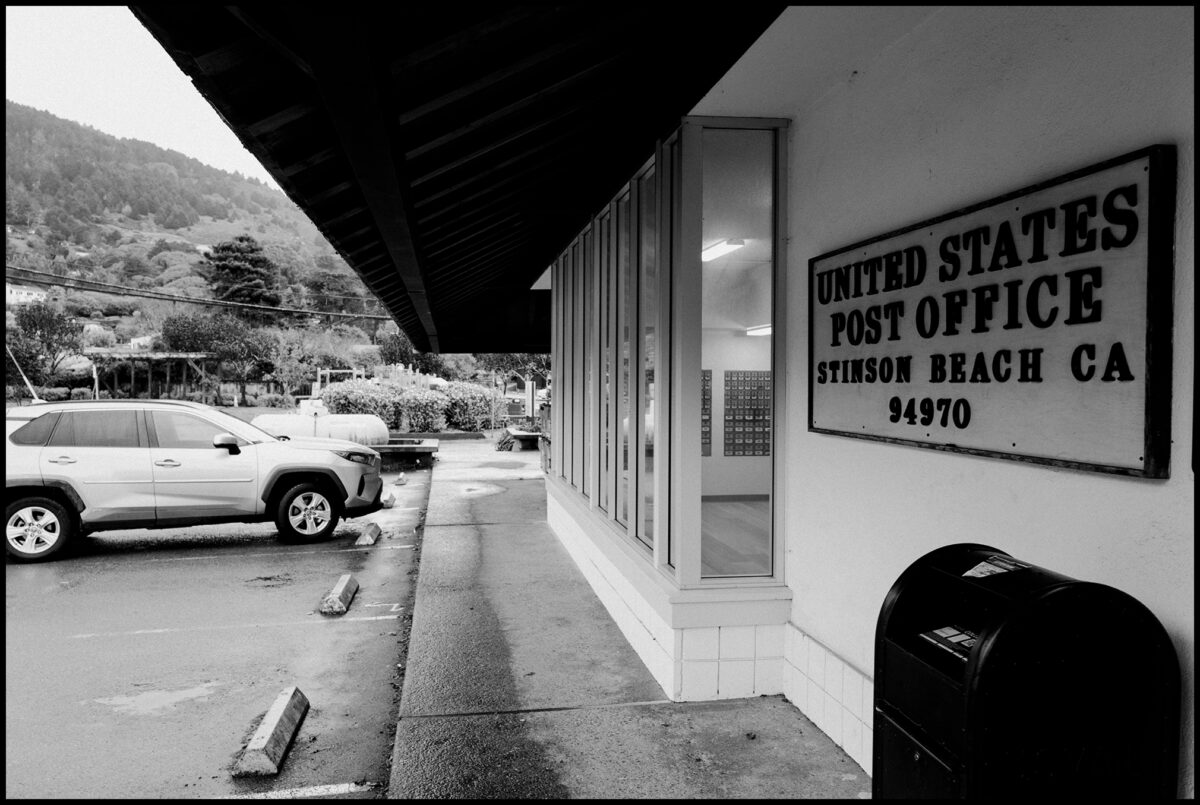
A major Bay Area property developer has purchased the building that houses the Stinson Beach Post Office and plans to demolish and replace it with six condominiums, including two affordable units, and a commercial space set aside for the postal service.

The owner of Novato-based Thompson Builders, Paul Thompson, submitted a preliminary proposal to the Marin County Community Development Agency last week that takes advantage of recent state laws that expedite and maximize housing construction. 

Even if the county approves the project on a rapid timeline, it will likely take a year or so for the project to work its way through approvals—and another year before construction begins, according to Riley Hurd, the land-use attorney representing the owner.  

County officials say the project offers a rare opportunity to add several units at once in an area defined by an acute housing shortage and scarce developable land. 

“If it’s adding to the housing supply and it isn’t going to be short-term rentals, that’s great,” said Sarah Jones, director of the Community Development Agency.

The project will require a coastal development permit, an environmental review and especially careful consideration, given the importance of the post office to the community, Ms. Jones stressed. In neighboring Bolinas, a two-year closure of the post office due to a lease dispute caused major disruptions. 

Mr. Hurd said that keeping the post office as a tenant is a top priority for the developer, who plans to carry out the construction without interrupting postal service, either by sequencing the work or opening a temporary facility.

“My client is building a brand-new building on the property, modernizing it, and hopefully extending the post office lease for a significant amount of time,” Mr. Hurd said. “The current lease is set to expire in one year, and we really want to avoid a Bolinas situation.”

Roosevelt Sargent, the Stinson Beach postmaster, said he knew the building had been sold but was unaware of the developer’s construction plans.

“In the event of any major construction, the U.S. Postal Service is prepared to work closely and collaboratively with its leaseholders to ensure postal services continue to operate efficiently and reliably with minimal impacts to local customers,” said Kristina Uppal, a postal service spokeswoman. 

Under the state’s density bonus law, which offers incentives to developers who build affordable units, the project could qualify for concessions from some county zoning rules, such as eased height, setback and parking requirements. Mr. Hurd said that with those concessions, the project could potentially qualify for as many as 36 units. But Mr. Thompson has no interest in a project of that scale, he said.

The proposal submitted this week includes four detached market-rate condominiums, two with two bedrooms and two with three bedrooms, and two-affordably priced one-bedroom units. The smaller units would be located above the new commercial space. In Marin County, where the median income is extremely high, a single person with an annual income of as much as $156,000 would qualify for the smaller units.

The one-bedroom units would be about 775 square feet, the two-bedroom units would be about 1,700 square feet, and the three-bedroom units would be about 2,200 square feet.

Mr. Thompson submitted the preliminary application under the terms of the California Housing Crisis Act of 2019, another piece of recent legislation aimed at speeding the construction of housing. Filing under the act means the project would be built under current zoning rules even if the county adopts more stringent restrictions before construction begins.

The housing crisis act also limits the county to holding no more than five hearings, including public information sessions and hearings by the Planning Commission and Board of Supervisors, before it makes a final decision on the project.

The developer has six months to submit a final application, and the county won’t begin its formal review until it does so.  

As currently developed, the L-shaped lot at 15 Calle del Mar includes a 9,000-square-foot parking lot that stretches across the face of a 3,400-square-foot building. The post office, the catering business Debonair Events and a small cleaning company presently occupy the building, which is just a short stroll from the beach. 

The four market-rate condos would be located where that structure now stands. A new residential-commercial building would be constructed directly across from the Stinson Beach Library, on a currently undeveloped section of the parcel. Post office patrons would enter from Highway 1.

The current parking lot would be eliminated, providing space for the condos and a private driveway that residents would enter from Calle Del Mar.

Each of the five buildings would have two stories, and the exterior would be constructed of vertical cedar siding. The larger homes would have a carport with space for two vehicles, and the smaller ones would have a single parking spot. Two parking spaces would be designated for post office customers.

The current septic system, which is located beneath the parking lot, would be replaced by an upgraded system. Mr. Thompson has shared his proposed septic design with the Stinson Beach County Water District, which must approve it.

Thompson Builders has built many projects around the Bay Area, including civic centers, parking structures, fire stations, schools, libraries, infrastructure projects and health care facilities. Last summer, the company broke ground on an 11-story, 425-unit affordable housing project at the bottom of Portero Hill in San Francisco.