
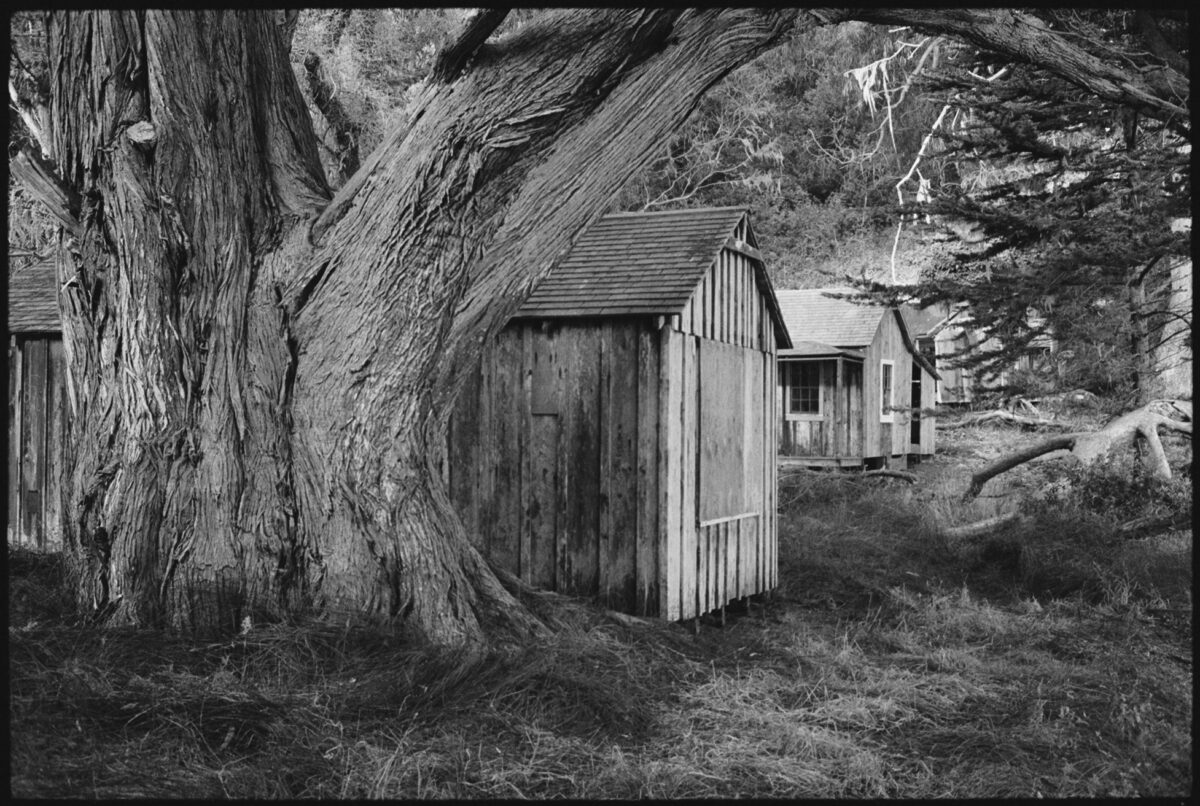
With a new era dawning in the Point Reyes National Seashore, Theresa Harlan sees a propitious moment to transform the last home built by Coast Miwok hands on the western shore of Tomales Bay and return it to Indigenous stewardship.
She wants the dilapidated property—the former home of the family that adopted her—to be rematriated, renovated and fashioned into a living history museum honoring the region’s Native peoples, known as the Tamal-ko.
National Park Service officials were receptive to the idea when she first raised it in 2021, but their regular discussions ceased after the retirement of former park superintendent Craig Kenkel a year and a half ago.
Now Ms. Harlan is mounting a campaign to put the project atop the agenda of Mr. Kenkel’s successor, Anne Altman.
As leader of the Alliance for Felix Cove, Ms. Harlan is seeking 1,000 signatures of support by the end of the year. Since Thanksgiving, she has been circulating her vision plan for the site, hoping to generate momentum. So far she has collected only 100 signatures.
The time is right, Ms. Harlan said, with park officials reshaping the landscape in the aftermath of the legal settlement that ended all dairy farming and most ranching in the seashore. Working with the Nature Conservancy, the park service is planning to restore native vegetation in the former pastoral zone and build a network of hiking and biking trails across a newly designated scenic landscape zone.
“We’re asking you to join us in calling on the National Park Service to return Indigenous lands to Indigenous hands!” Ms. Harlan wrote in a message seeking support. “Our vision for Felix Cove begins with bringing together Indigenous voices that have been silenced for too long.”
Ms. Harlan’s adoptive family, the Felixes, were the last of the Coast Miwok to leave the park side of the bay, forced out in an eviction dispute that went all the way to the California Supreme Court in 1956.
Her vision for what is officially known as Laird’s Landing involves protecting it in the National Register of Historic Places, repairing the structures her grandfather built, and transforming the cove into a living cultural center for Indigenous communities. It would be renamed Felix Cove, after her family history.
“We had submitted our vision plan to Craig Kenkel a few years ago and had hoped that it would lead to a cooperative agreement, but he retired and that kind of set us back to ground zero,” Ms. Harlan said. “As time went on, nothing happened.”
She had planned to press the matter with Ms. Altman earlier this year but held off after the Trump administration took office and began slashing park budgets. Then the 43-day shutdown paralyzed government operations.
Now, time is of the essence, she said, with towering eucalyptus trees planted around the structures vulnerable to winds blowing over the bay. “It’s a turn-of-the-century home, and we don’t know how many more winter storms it can survive,” she said. “It’s just a matter of time before it lives out its nine lives.”
When Ms. Harlan began her conversations with Mr. Kenkel in April 2021, park officials had not yet signed their co-management agreement with the Federated Indians of Graton Rancheria, the only federally recognized tribe representing the Coast Miwok. They formalized their government-to-government relationship that August.
Now both Ms. Altman and Greg Sarris, the tribal chairman, would have to sign off on any plans for Laird’s Landing. Ms. Harlan, who is not a member of the tribe, said Mr. Sarris declined to endorse the plan.
In response to questions sent by the Light, both Ms. Altman and Mr. Sarris declined to comment.
The draft vision plan on the alliance’s website calls for hiring a master planning firm to host community conversations about the future of the site.
“The vision plan is really just the beginning of a mechanism for community discussion, input and planning,” Ms. Harlan said. “In this era that we’re in, in which everyone is thinking about the park’s future, we’re throwing out our vision plan so that it can be part of the discussion.”
Ms. Harlan, who was born in New Mexico and has roots in the Kewa and Jemez Pueblos, was adopted into the Felix family as a child. Her mother, Elizabeth Harlan, was born and raised at the cove, but by the time Ms. Harlan was adopted, the family had moved to Napa.
The Felix family lived on the western shore of Tomales Bay for generations. Ms. Harlan’s great-great grandparents, Euphrasia and Domingo Felix, settled at Felix Cove in the mid-19th century. The family worked as cooks at seashore ranches until her grandmother, Bertha Felix Campgili, died in 1949, and the dairymen who owned K Ranch tried to evict the family.
Her uncle, Victor Sousa, fought the eviction in court but lost because the family had no records of paying property taxes.
Without support from Graton Rancheria, Ms. Harlan faces long odds. But she has many supporters outside the tribe—both Native and non-Native—who hope that she succeeds.
Among them is Steve Costa, an Inverness resident and a longtime friend who circulated the vision plan in his annual holiday message to friends.
“Together, we can honor the spirit of Thanksgiving by advocating for the rights and recognition of Indigenous peoples and supporting the vision that will revitalize Felix Cove for generations to come,” he wrote.
Steve Sciallo, a founding member of the Coast Miwok Tribal Council of Marin, whose members are not enrolled in the rancheria, also endorsed Ms. Harlan’s plan.
“I had relatives that lived out in the seashore in the past,” he said. “It’s a beautiful area, but it was rough living. They earned their living fishing for the most part or working as ranch hands with no rights whatsoever. It would be a good gesture for the park service and the rancheria to put the alliance’s vision plan in place.”
For more information about the Alliance for Felix Cove’s vision plan, visit https://tinyurl.com/felixcoveplan
This article was amended on Dec. 29, 2025 to reflect tribal chairman Greg Sarris’s position on the Felix Cove vision plan, according to Theresa Harlan: he did not respond to requests to meet about the plan, which he declined to endorse.